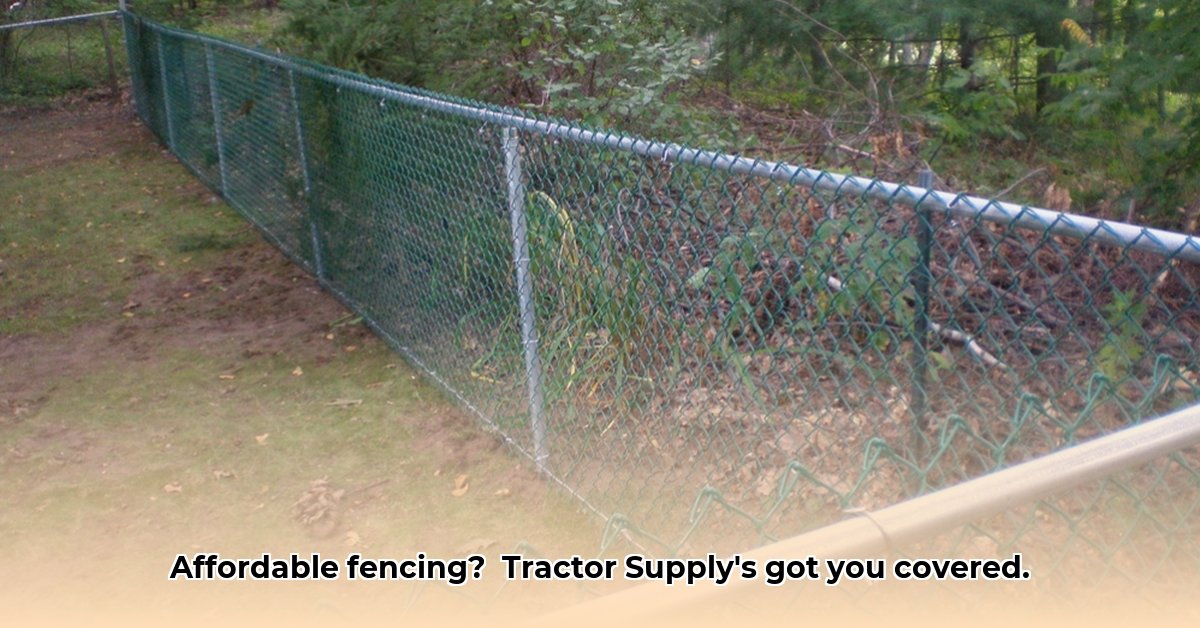
Building and maintaining fences represents a significant investment for farmers. Choosing the right fencing material can significantly impact both short-term expenses and long-term sustainability. This guide focuses on chain link fencing from Tractor Supply, offering a comprehensive cost-effectiveness analysis, durability assessment, and environmental impact review to help you make an informed decision. For more information on fencing options for containing animals, check out this helpful resource.
Chain Link Fencing: A Practical Overview
Chain link fencing is a popular choice for agricultural applications due to its versatility and generally lower initial cost compared to other materials like wood or vinyl. It's widely used for containing livestock, defining property boundaries, and protecting crops. However, its long-term sustainability requires careful consideration of factors beyond the initial purchase price.
Cost-Effectiveness Analysis: Chain Link vs. Competitors
The initial cost of chain link fencing is typically lower than that of wood or vinyl. However, a true cost-effectiveness analysis requires comparing initial costs, maintenance expenses, and lifespan across different materials. Isn't it crucial to understand the total cost of ownership before making such a significant investment?
| Fencing Type | Initial Cost per Foot ($) | Lifespan (Years) | Annual Maintenance Cost ($) | Total Cost Over 20 Years ($) |
|---|---|---|---|---|
| Chain Link (Galvanized) | 2-7 | 15-20 | 0.50-3 | 17-127 |
| Pressure-Treated Wood | 5-12 | 10-15 | 1-5 | 25-230 |
| Vinyl | 10-25 | 20-30 | 0.25-1 | 75-525 |
Note: These figures are estimates based on average prices and may vary depending on location, quality of materials, and installation complexity. Always obtain quotes from local suppliers.
Durability and Maintenance: Maximizing Fence Lifespan
The longevity of a chain link fence depends heavily on the wire gauge (thicker is better), coating type (galvanized or vinyl-coated offers superior rust protection), and proper installation. Regular maintenance, including cleaning and prompt repair of damaged sections, is crucial in extending its lifespan. How often should you inspect your fence to ensure its structural integrity? A thorough inspection every six months will help catch small problems before they become major and costly repairs.
| Fencing Type | Maintenance Frequency | Typical Repairs | Associated Costs ($) |
|---|---|---|---|
| Chain Link | Semi-annual | Rust repair, tightening | 0.50-5 per occurrence |
| Pressure-Treated Wood | Annual | Wood replacement, repainting | 5-25 per occurrence |
| Vinyl | As-needed | Repair cracks or breaks | 10-50 per occurrence |
Environmental Impact: A Sustainable Perspective
The environmental impact of chain link fencing stems from its manufacturing process, material sourcing, and end-of-life disposal. While steel production consumes energy and resources, using recycled steel significantly reduces the carbon footprint. Choosing a product made with recycled content is one way to minimize the environmental burden. Furthermore, responsible recycling at the end of the fence's life is vital. Is it more environmentally friendly to choose a fence with recycled content, even if it's slightly more expensive? The long-term environmental benefits could justify the higher initial investment.
Choosing the Right Chain Link Fence: A Step-by-Step Guide
Selecting the appropriate chain link fence involves considering several factors:
- Wire Gauge: Thicker wire (lower gauge number, e.g., 9 gauge) offers superior strength and durability, although at a higher cost.
- Fence Height: Height should be determined by the type of livestock or the purpose of the fence.
- Coating: Galvanized coating provides basic rust protection; vinyl coating offers enhanced durability and aesthetic appeal, particularly in harsh climates.
Installation Guide: A Simple Overview
Proper installation is critical for maximizing fence longevity and preventing costly repairs. While a detailed guide is beyond the scope of this article, key steps include proper post setting, accurate wire tensioning, and secure attachment of the chain link fabric. Consider consulting with a fencing professional or referring to online tutorials for detailed instructions.
Conclusion: Making an Informed Decision
Chain link fencing presents a viable option for farmers seeking a balance between cost-effectiveness and durability. However, a holistic approach considering initial costs, maintenance needs, lifespan, and environmental impact is essential for making an informed decision. By carefully weighing these factors, farmers can choose a fencing solution that aligns with their budget and sustainability goals.